
When it comes to protecting your boat and maximizing your dock space, choosing between floating boat ports and traditional boat lifts is one of the most important decisions you’ll make as a waterfront property owner. Both options offer distinct advantages and drawbacks, and understanding the differences can help you make an informed choice that suits your specific needs, budget, and waterfront conditions.
Understanding Floating Boat Ports
Floating boat ports represent a modern approach to boat storage and protection. These systems utilize buoyant platforms that rise and fall naturally with water level changes, eliminating the need for mechanical intervention. When you’re shopping for floating boat ports for sale, you’ll find that they come in various sizes and configurations to accommodate different boat types and dock layouts.
The fundamental principle behind floating boat ports is elegantly simple. As water levels fluctuate due to tides, seasonal changes, or rainfall, the port adjusts automatically without requiring any operator input. This passive system means there are virtually no moving parts to maintain, repair, or replace. The dock structure itself remains stationary while the boat rests on a platform that moves with the water, keeping your vessel at a consistent height relative to the water surface.
One of the most appealing aspects of floating boat ports is their environmental friendliness. They don’t require electricity to operate, which means lower energy costs and a reduced carbon footprint. Additionally, because they move with natural water fluctuations, they cause minimal disruption to the surrounding ecosystem compared to traditional lift systems that create mechanical stress on the water environment.
How Traditional Boat Lifts Work
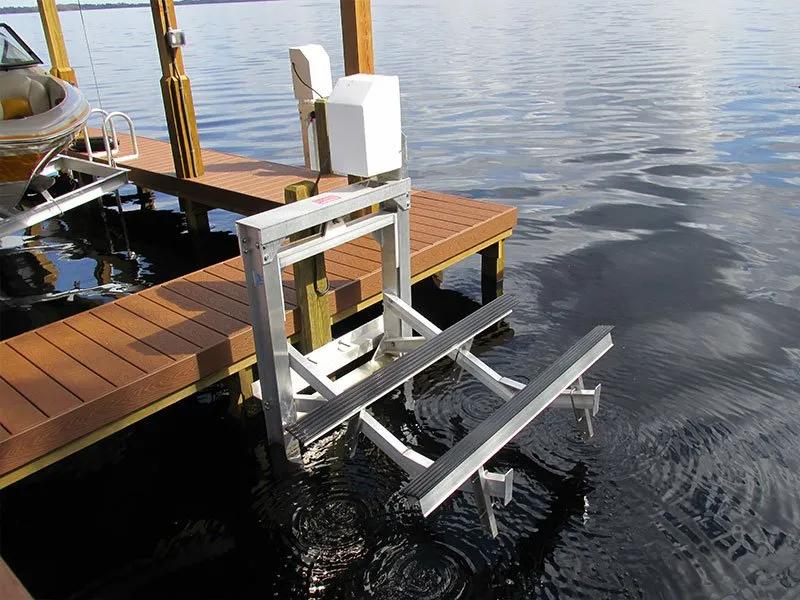
Traditional boat lifts operate using mechanical or hydraulic systems to raise and lower your vessel. These systems typically employ electric motors, pulleys, and cables or hydraulic cylinders to lift the boat out of the water or lower it back down. When comparing boat port vs lift comparison options, traditional lifts have been the industry standard for decades, and many dock owners continue to choose them for various reasons.
The primary advantage of traditional lifts is their ability to completely remove your boat from the water. This provides maximum protection from saltwater corrosion, algae growth, and other water-related damage. If you live in an area where you need to store your boat for extended periods, a traditional lift can extend your vessel’s lifespan significantly.
Traditional lifts also offer precise control over boat positioning. Operators can raise or lower the boat to exact heights, which can be useful for maintenance work or specific storage requirements. Many models include safety features like automatic shut-off switches and load-sensing capabilities that prevent overloading.
However, traditional lifts require regular maintenance. Electric motors need servicing, hydraulic lines can develop leaks, cables can fray, and mechanical components naturally experience wear and tear over time. This ongoing maintenance represents both a financial investment and a time commitment from the dock owner.
Cost Considerations and Installation
When evaluating your options, cost is typically a major factor. Initial installation costs for floating boat ports are generally lower than traditional lifts. Floating systems require minimal construction work and no electrical connections, which can reduce installation expenses by thousands of dollars depending on your specific situation.
Traditional lifts, conversely, often involve more complex installation procedures. Electrical work, foundation construction, and mechanical assembly can significantly increase upfront costs. However, some property owners find that the longevity and durability of traditional systems justify the higher initial investment.
Ongoing operational costs also differ substantially between these two options. Floating boat ports require minimal maintenance and no electricity, keeping your annual expenses low. Traditional lifts require regular servicing, occasional part replacement, and continuous electricity consumption, which can accumulate over time.
When searching for the best floating lift system or traditional alternatives, be sure to obtain detailed quotes that include both installation and projected maintenance costs. This comprehensive view will give you a clearer picture of the true financial investment required for each option.
Performance in Different Water Conditions
The type of water environment you have significantly impacts which system works best for your dock. Floating boat ports excel in areas with variable water levels. If you experience significant tidal fluctuations, seasonal water level changes, or unpredictable rainfall patterns, floating systems handle these variations automatically without any intervention required.
Traditional lifts work better in stable water conditions. If your waterfront location has minimal water level variation, a traditional lift can be permanently positioned without difficulty. These systems also perform well in confined spaces where you need maximum vertical clearance or specific boat positioning.
Saltwater environments present unique challenges for both systems. Floating boat ports experience less corrosion stress because they move naturally with water changes, reducing mechanical strain. Traditional lifts in saltwater settings require more frequent maintenance to prevent rust and corrosion in electrical and hydraulic components.
For freshwater lakes and calm river settings, either system can work effectively, though your choice may depend more on personal preference, available space, and budget constraints.
Custom Floating Dock Lifts and Hybrid Solutions
As the marine industry evolves, custom floating dock lifts have emerged as a sophisticated middle-ground option. These systems combine elements of both traditional and floating approaches, offering flexibility that suits diverse needs. Custom designs can incorporate motorized assistance for easier operation while retaining the automatic water-level adjustment benefits of floating systems.
Custom floating dock lifts allow you to tailor your dock solution to your specific requirements. Whether you need accommodation for larger vessels, require specific safety features, or have unusual space constraints, custom options can address these concerns. While custom solutions typically cost more initially, they often provide superior long-term value by perfectly matching your unique situation.
Making Your Decision
Choosing between floating boat ports and traditional lifts ultimately depends on several factors specific to your situation. Consider the water conditions at your location, your budget constraints, maintenance preferences, and how often you use your dock. Think about the size and type of boats you’ll be storing, the length of your boating season, and your property’s specific characteristics.
Floating boat ports for sale make sense if you value simplicity, minimal maintenance, lower costs, and automatic operation. These systems work particularly well for property owners who want a hassle-free solution that requires no mechanical oversight. They’re ideal for variable water conditions and environmentally conscious owners.
Traditional lifts make sense if you prioritize maximum boat protection, have stable water conditions, need precise boat positioning, and don’t mind regular maintenance. They’re excellent for protecting expensive vessels from environmental damage and work well in confined spaces.
Conclusion
Both floating boat ports and traditional lifts offer legitimate advantages depending on your specific circumstances. Floating systems excel in simplicity and cost-effectiveness, while traditional lifts provide maximum protection and precise control. Evaluate your water conditions, budget, and maintenance preferences carefully before making your final decision. The right choice will provide reliable boat protection and dock functionality for years to come.
Need Boat Lift Solutions Near You?
Ready to elevate your waterfront experience? Reach out to us at Boat Lift Solutions today, and let our expert team provide the reliable, high-quality boat lift services you deserve. Whether you need installation, maintenance, or repairs, we’re here to deliver tailored solutions that protect your investment and keep your boating hassle-free. Contact us now and let’s get your lift running at its best!