
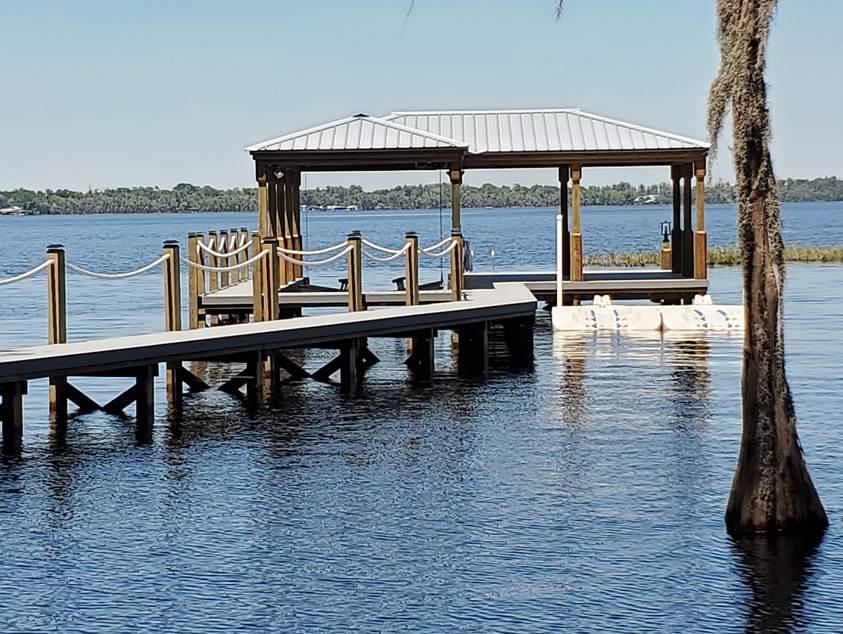
Storm season can put waterfront equipment under serious stress across Central Florida. Heavy rain, strong winds, fluctuating water levels, floating debris, and repeated afternoon thunderstorms can expose problems with boat lifts and floating ports that were easy to overlook during calmer weather.
Preparing before conditions deteriorate gives waterfront homeowners time to identify worn components, clear potential hazards, and address equipment concerns without waiting until a storm is approaching.
Quick answer: Storm season preparation for a boat lift or floating port should focus on inspecting structural and mechanical components, checking attachment points, removing loose items, watching changing water levels, and following the equipment manufacturer’s storm procedures. Central Florida homeowners should complete these checks before severe weather is forecast rather than making last-minute adjustments during dangerous conditions.
What local homeowners should know
-
Inspect boat lifts and floating ports early enough to address visible damage before severe weather arrives.
-
Central Florida’s storm season can bring both high winds and rapidly changing water conditions, creating multiple sources of stress on waterfront equipment.
-
Homeowners around Orlando-area lakes and communities throughout Orange, Seminole, Lake, Osceola, and Volusia counties should consider the conditions specific to their waterfront property.
-
Loose accessories and waterfront items can become hazards during strong winds and should be secured or removed when safe to do so.
-
Manufacturer instructions matter because storm preparation procedures can differ by lift, port, anchoring system, and installation.
Why Does Storm Preparation Matter for Central Florida Boat Lifts and Floating Ports?
Storm preparation matters because boat lifts and floating ports can face wind, waves, debris, changing water levels, and prolonged moisture during Central Florida storm season. A component that performs normally during everyday use may behave differently when severe weather places unusual loads on the waterfront system.
Conditions also vary considerably from one property to another. A protected residential canal may experience different forces than an exposed lakefront property. Waterfront homes around the Winter Park Chain of Lakes, Clermont-area lakes, Lake County, Seminole County, and other parts of the region can have different shoreline configurations and exposure.
Boat Lift Solutions works with waterfront equipment, and we encourage homeowners to treat storm preparation as preventive maintenance rather than a last-minute task. Our goal is to help identify equipment concerns while conditions are still safe enough for appropriate inspection or service.
What Should Homeowners Inspect Before Storm Season?
A pre-storm inspection should identify visible wear, looseness, corrosion, damage, and other conditions that could affect how the boat lift or floating port performs under additional stress. The safest time to find these problems is well before severe weather reaches the area.
For a boat lift, homeowners can visually check accessible cables, pulleys, bunks, brackets, fasteners, motors, covers, electrical components, and supporting structures without placing themselves beneath suspended equipment or attempting repairs beyond their experience.
For a floating port, inspect accessible connections, attachment hardware, guide systems, walking surfaces, and adjoining dock areas. Look for unusual movement or damaged components that may need professional attention.
What Do Local Weather Conditions Mean for Waterfront Equipment?
Central Florida’s combination of thunderstorms, tropical weather, heat, humidity, and heavy rainfall means waterfront equipment can experience repeated environmental exposure throughout the year. Storm preparation should therefore be viewed as part of ongoing maintenance rather than a single task performed only when a hurricane is forecast.
The National Weather Service and National Hurricane Center are appropriate sources for current storm information and official forecasts. Homeowners should base personal safety decisions on official guidance and avoid working on waterfront equipment once dangerous weather, lightning, flooding, or high winds are present.
From a service perspective, repeated exposure matters too. Hardware that already shows corrosion, a cable with visible deterioration, or a connection with excessive movement deserves attention before storm conditions add another layer of stress.
What Warning Signs Should Waterfront Homeowners Watch For?
Warning signs include visible deterioration, unusual operation, loose components, and changes in how a boat lift or floating port sits or moves. These conditions do not automatically mean the equipment will fail, but they are good reasons to investigate before storm season intensifies.
Watch for:
-
Frayed, kinked, rusted, or visibly damaged lift cables.
-
Unusual noises, hesitation, binding, or uneven movement while operating the lift.
-
Loose, bent, cracked, or heavily corroded accessible hardware.
-
Floating port connections that appear damaged or allow unusual movement.
-
Bunks, guides, brackets, or other components that have shifted from their normal position.
-
Electrical components showing visible damage or deterioration.
-
Sections of dock or port equipment that no longer sit as expected.
-
Damage from previous storms, boat impacts, or floating debris that has not been evaluated.
Stop using equipment when continued operation appears unsafe. A professional inspection is preferable to repeatedly cycling a lift to see whether an obvious problem becomes worse.
When Should You Call a Boat Lift Professional?
Call a professional when preparation involves mechanical repairs, electrical concerns, structural components, damaged cables, questionable attachment points, or equipment that is operating abnormally. Homeowners can perform basic visual checks, but repairs involving heavy equipment or suspended loads should not become storm-season DIY projects.
Timing matters in Central Florida. Waiting until a named storm is approaching can reduce the time available to evaluate a problem and determine an appropriate solution.
If you notice something unusual during routine use, addressing it during calm weather provides a safer opportunity to inspect the system.
What Common Conditions Can Increase Storm-Season Risk?
Common conditions that increase risk include deferred maintenance, corrosion, loose connections, previous damage, debris exposure, and equipment that has not been inspected recently. Central Florida’s waterfront environment can expose components to moisture and weather long before a major storm enters the forecast.
1. Existing wear
Storm conditions can add stress to parts that are already deteriorated. Visible cable damage, worn hardware, or abnormal lift operation should not be ignored.
2. Loose waterfront items
Furniture, accessories, water toys, and other unsecured objects can move during strong winds. Removing or securing appropriate items reduces potential debris around the dock and equipment.
3. Changing water conditions
Heavy rainfall and storm systems can alter water levels and movement. Floating equipment is specifically designed to move with water, but its attachment and guide systems still need to be in suitable condition.
4. Previous storm damage
A system may continue operating despite damage or movement from an earlier weather event. An inspection can help identify issues before the next period of severe weather.
5. Exposure
An open lakefront property may experience storm conditions differently from a sheltered canal, cove, or smaller inland water body. Preparation should reflect the actual site.
How Can You Maintain a Boat Lift or Floating Port Before Severe Weather?
Preventive maintenance should begin before Central Florida enters an active period of severe weather, with additional visual checks after significant storms when conditions are safe. Routine attention gives homeowners more time to respond to wear instead of discovering it during urgent preparation.
Keep the surrounding dock area orderly and remove debris that could interfere with equipment. Check visible hardware and connections periodically. Pay attention to changes in sound, movement, alignment, and overall operation.
Follow manufacturer guidance for lubrication, electrical care, lift positioning, boat storage, and storm procedures. Do not assume that advice for one type of boat lift or floating port applies to every system.
DIY maintenance should stop where electrical work, heavy components, cables under tension, underwater work, or structural repairs begin.
What Results Can You Expect From Pre-Storm Maintenance?
Pre-storm maintenance can help identify correctable problems, improve equipment readiness, and reduce avoidable sources of damage, but no preparation can make waterfront equipment immune to severe weather. Hurricanes and strong storms can create forces beyond normal operating conditions.
A professional inspection may identify worn or damaged parts, maintenance needs, alignment concerns, or other issues that deserve attention. Depending on the condition of the system, the appropriate next step may be maintenance, repair, component replacement, or a broader equipment evaluation.
The realistic objective is preparation and risk reduction, not a promise of storm-proof performance.
What Storm-Prep Mistakes Should Central Florida Homeowners Avoid?
The biggest storm-prep mistakes involve waiting too long, ignoring existing equipment problems, and attempting hazardous last-minute work. A better approach is to prepare during calm weather and follow equipment-specific guidance.
Mistake: Waiting until a hurricane watch or warning to inspect equipment.
Consequence: There may be limited time to address a problem safely.
Better approach: Make inspection part of routine seasonal maintenance.
Mistake: Assuming a lift that operates is automatically in good condition.
Consequence: Visible wear or abnormal movement may remain unaddressed.
Better approach: Inspect the equipment rather than relying only on whether the motor runs.
Mistake: Leaving loose items around the waterfront.
Consequence: Strong winds can move unsecured objects.
Better approach: Secure or remove appropriate items before conditions deteriorate.
Mistake: Following generic storm advice without checking manufacturer instructions.
Consequence: The recommended procedure may not suit the specific lift or floating port.
Better approach: Use guidance applicable to your equipment and installation.
Mistake: Working outside after conditions become dangerous.
Consequence: Lightning, wind, slippery surfaces, and changing water conditions can create serious hazards.
Better approach: Complete preparation early and prioritize personal safety once severe weather approaches.
What Is a Common Central Florida Storm-Prep Scenario?
A common local scenario is a waterfront homeowner beginning hurricane preparation and noticing a boat lift cable that looks different from the others or a floating port connection that has developed more movement than usual. The equipment may still appear usable, but the approaching storm makes the unresolved condition more concerning.
The better time to evaluate that problem is before a storm enters the immediate forecast. A professional can inspect the condition and determine whether maintenance or repair is appropriate without relying on assumptions about what the equipment can withstand.
This is one reason seasonal inspections are valuable for waterfront homes from the Orlando area through Lake and Seminole counties.
Which Services Can Help Protect Waterfront Equipment?
Boat lift and floating port inspection, maintenance, repair, and equipment-specific service can help address existing problems before storm conditions add further stress. The appropriate solution depends on the equipment, its condition, installation, and waterfront environment.
We can evaluate concerns such as abnormal lift operation, visible component wear, damaged hardware, and floating port issues to help determine an appropriate next step.
Should You DIY Storm Preparation or Call a Professional?
DIY storm preparation is appropriate for basic visual checks and safely securing removable waterfront items, while mechanical, electrical, structural, and cable-related concerns should be handled by qualified professionals. The distinction becomes especially important when heavy equipment, tensioned components, or water and electricity are involved.
Homeowners can look for obvious changes, keep the area clear, review manufacturer instructions, and monitor official forecasts.
Professional help makes more sense when equipment is damaged, operating unevenly, making unusual noises, showing significant corrosion, or requiring repairs. Never place yourself beneath a suspended boat or enter hazardous conditions to inspect equipment.
Where Do We Help Central Florida Waterfront Homeowners?
Central Florida includes a wide range of waterfront properties, from inland lake homes around Orlando and Winter Park to properties throughout Orange, Seminole, Lake, Osceola, and Volusia counties. Waterfront conditions and equipment needs can differ substantially across the region.
What Can Happen If You Ignore Boat Lift or Floating Port Problems?
Ignoring existing equipment problems can allow wear or damage to continue before the next period of severe weather. For Central Florida waterfront homeowners, that can mean discovering a repair need when storm preparation time is already limited.
A worn component does not necessarily mean a storm will cause failure, and maintenance cannot eliminate every weather-related risk. The practical reason to act early is simpler: known problems are generally easier to evaluate when conditions are calm and the work is not being driven by an approaching storm.
Frequently Asked Questions About Central Florida Boat Lift and Floating Port Storm Prep
When should I prepare my boat lift for storm season in Central Florida?
Prepare before severe weather appears in the immediate forecast. Early seasonal inspection gives you time to identify visible wear, unusual operation, or damaged components while conditions remain safe. Continue monitoring the equipment during storm season and visually check it after significant weather once authorities and conditions indicate it is safe.
Should I raise or lower my boat on the lift before a hurricane?
Follow the specific guidance provided by your boat lift and boat manufacturers and recommendations applicable to your installation. The correct storm procedure can depend on lift design, boat characteristics, expected water levels, and site conditions. Avoid relying on a single generic positioning rule for every Central Florida waterfront property.
What should I check on my boat lift before a Central Florida storm?
Check accessible cables, hardware, bunks, guides, pulleys, structural components, motors, covers, and electrical equipment for visible damage or unusual conditions. Also pay attention to how the lift operates. Frayed cables, uneven movement, unusual noises, loose hardware, or electrical concerns are reasons to stop and seek professional evaluation.
How should I prepare a floating port for severe weather?
Inspect accessible attachment points, guide systems, connections, hardware, and the surrounding dock area, then follow the port manufacturer’s storm recommendations. Remove or secure appropriate loose waterfront items while conditions are safe. Because floating systems and installations differ, avoid making unapproved modifications based solely on generic storm advice.
Can heavy rain affect waterfront equipment in Central Florida?
Yes, heavy rainfall can contribute to changing water conditions around docks, boat lifts, and floating ports. The effect varies by lake, canal, drainage conditions, shoreline, and storm. Homeowners should monitor their property safely, follow local emergency guidance, and avoid entering the waterfront area during lightning, flooding, or dangerous winds.
Should I inspect my boat lift after a hurricane or tropical storm?
Yes, a visual post-storm inspection is sensible once conditions are officially safe. Look for debris impacts, shifted components, damaged cables, unusual alignment, electrical damage, and changes in operation. Do not immediately operate equipment that appears damaged, and never work around compromised electrical systems or unstable waterfront structures.
Are lakefront boat lifts in Central Florida exposed to different risks than canal lifts?
Yes, exposure can differ considerably by location. An open lakefront site may experience different wind and wave conditions than equipment in a protected canal or cove. Shoreline orientation, nearby structures, water-level changes, and debris can also influence conditions, so storm preparation should reflect the individual property.
Is storm preparation enough to prevent boat lift damage?
No. Preparation can reduce avoidable risks and identify existing equipment problems, but it cannot guarantee that a lift, port, dock, or boat will avoid damage during severe weather. Central Florida storms can produce extreme conditions. The purpose of preparation is to improve readiness while prioritizing personal safety.
Prepare Your Central Florida Waterfront Before the Forecast Gets Urgent
Storm preparation is most useful when it happens before the weather becomes an emergency. Regular inspection, equipment-specific maintenance, and early attention to visible problems can help Central Florida homeowners enter storm season better prepared.
Help Protect Your Waterfront Equipment Before the Next Storm
We can help evaluate boat lift and floating port concerns so you can address equipment needs while conditions are still safe and manageable.