
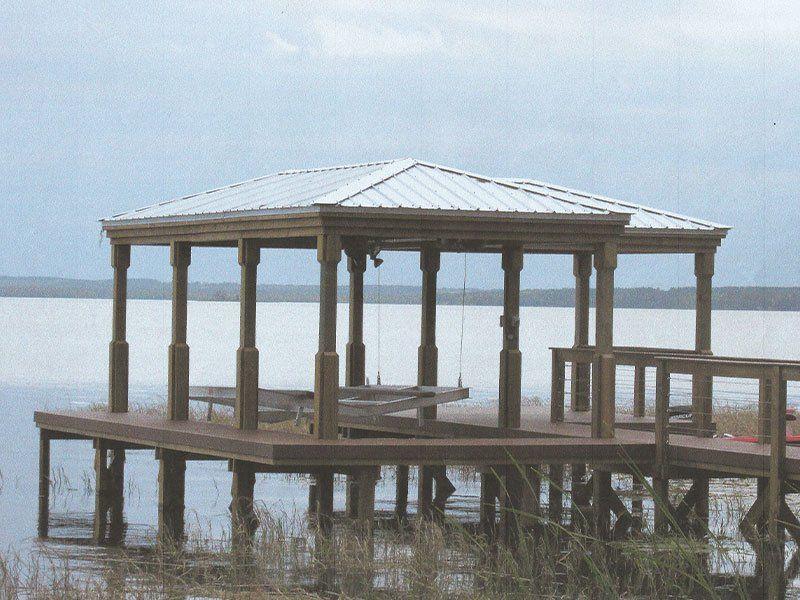
Central Florida lakefront living makes it easy to get on the water, but a boat lift has to handle much more than simply raising and lowering a boat. Water levels, shoreline conditions, afternoon thunderstorms, humidity, and the characteristics of individual lakes can all affect how a lift should be positioned and installed.
Professional boat lift installation matters because the lift, boat, dock, and waterfront conditions need to work together. A properly planned installation considers vessel size and weight, water depth, lake bottom conditions, dock configuration, lift capacity, access, and long-term exposure to Central Florida weather. Those details can affect how reliably the lift operates and how well it supports the boat over time.
What Central Florida boat owners should know
-
Boat lift selection should account for the boat’s actual loaded weight, dimensions, hull configuration, and how the vessel needs to be supported.
-
Lake conditions can vary significantly across Central Florida, including differences in water depth, bottom conditions, shoreline configuration, and seasonal water levels.
-
Lift placement needs to work with the existing dock and provide enough clearance for safe entry, loading, lifting, and lowering.
-
Professional installation can identify site-specific challenges that may not be obvious from the dock or shoreline.
-
Routine inspection remains important after installation because hardware, cables, bunks, electrical components, and structural connections can wear over time.
Why Does Professional Boat Lift Installation Matter on Central Florida Lakes?
Professional boat lift installation matters on Central Florida lakes because lift performance depends on the specific boat, dock, shoreline, and water conditions at the property. Correct sizing and positioning help create a system that supports the vessel appropriately and operates reliably through changing lake and weather conditions.
A lift that looks straightforward on paper may require different planning once the waterfront is evaluated. Water depth at the end of a dock, lake bottom characteristics, dock height, available clearance, and boat dimensions can influence the appropriate setup.
Central Florida also brings environmental considerations. Intense sun, high humidity, heavy rain, thunderstorms, and fluctuating water conditions can expose waterfront equipment to persistent wear. These factors make installation quality especially important for lakefront properties throughout the region.
Boat Lift Solutions helps local boat owners evaluate boat lift needs based on the vessel and waterfront where the equipment will actually operate. We can focus on matching the lift setup to the site rather than treating every lakefront installation the same.
What Do Local Conditions Tell Us About Boat Lift Installation?
Local conditions show that boat lift installation should be treated as a site-specific waterfront project rather than a one-size-fits-all equipment purchase. Central Florida contains lakes of different sizes, depths, shorelines, and surrounding development patterns, so conditions at one property may differ considerably from those at another.
For example, waterfront properties around Orlando-area lakes may have established docks with limited space for new equipment. Communities near the Butler Chain of Lakes, Conway Chain of Lakes, Winter Park Chain of Lakes, Clermont Chain of Lakes, and Lake Tohopekaliga can present different combinations of boat traffic, waterfront layouts, water depth, and access.
Rather than assuming conditions based on the lake name alone, the better approach is to evaluate the individual installation site.
How Can an Improper Installation Affect a Central Florida Boat Owner?
An improper boat lift installation can affect vessel support, ease of use, equipment wear, and the surrounding dock structure. If capacity, positioning, alignment, or support points are wrong, the owner may experience recurring operating problems instead of the convenient storage a lift is supposed to provide.
A lift that is difficult to use may also discourage regular lifting after a day on the water. Poor positioning can make approaching or leaving the lift awkward, while improper bunk placement can affect how the hull rests when raised.
The goal is not simply to get the boat out of the water. It is to create a setup that makes routine boating easier while supporting the vessel appropriately between outings.
What Warning Signs Suggest a Boat Lift Needs Professional Attention?
Boat lift warning signs include uneven lifting, unusual noises, visible cable wear, unstable movement, poor boat alignment, damaged hardware, and difficulty operating the system. Central Florida boat owners should address changes in lift performance early rather than assuming they are normal signs of waterfront equipment aging.
Watch for:
-
One side of the boat rising or lowering differently from the other.
-
Cables that appear frayed, kinked, corroded, or improperly seated.
-
Bunks that no longer align correctly with the hull.
-
Loose, damaged, or visibly deteriorated hardware.
-
Grinding, binding, or other unusual sounds during operation.
-
A lift that moves, twists, or feels less stable than it previously did.
-
Electrical components showing visible damage or inconsistent operation.
-
Changes in clearance caused by water-level fluctuations.
Avoid placing yourself underneath a raised vessel or attempting repairs that require working with loaded cables, electrical equipment, or unstable structural components.
When Should You Call a Professional for a Boat Lift?
You should call a professional when a boat lift needs installation, structural adjustment, capacity evaluation, significant alignment correction, electrical work, or repairs involving loaded components. Boat owners can perform basic visual checks, but problems affecting safe support or operation require more than routine DIY maintenance.
Simple monitoring can include checking for visible wear, keeping the lift area clear, observing whether the boat sits evenly, and noticing changes in operation.
Professional evaluation becomes more important when buying a different boat, modifying a dock, replacing an aging lift, or dealing with recurring problems. A boat that is heavier or shaped differently may require changes even when an existing lift still operates.
What Common Central Florida Conditions Affect Boat Lift Installation?
The most common Central Florida conditions affecting boat lift installation include changing water levels, lake bottom characteristics, dock configuration, severe weather exposure, and the dimensions of the boat itself. Each factor can influence lift selection, placement, stability, clearance, and long-term maintenance needs.
1. Water depth and seasonal changes: Lake levels do not remain identical throughout the year. Available depth and clearance should be considered when determining how the lift will operate.
2. Lake bottom conditions: The conditions below the waterline can influence installation planning and structural support.
3. Existing dock configuration: Older or established docks may create limitations involving width, height, access, structural condition, or lift positioning.
4. Central Florida weather: Strong sun, humidity, heavy rain, and thunderstorms create ongoing exposure for waterfront equipment.
5. Boat size and hull design: Length and weight are only part of the equation. Beam, hull shape, loaded weight, and support requirements also matter.
How Can Boat Owners Maintain a Professionally Installed Lift?
Boat owners can maintain a professionally installed lift by performing regular visual checks, keeping components clear of debris, watching cable and hardware condition, and responding promptly to changes in operation. Central Florida’s year-round boating weather makes consistent inspection more useful than waiting for a single annual boating season.
Before periods of frequent use, look over visible cables, bunks, hardware, guide components, and electrical equipment. After major storms, check for obvious changes around the dock and lift before operating it.
DIY maintenance should stop when a task involves electrical repairs, structural changes, loaded cables, lifting mechanisms, or working beneath an elevated boat. Those situations can create risks that are not worth taking to save a service call.
What Results Should You Expect From Professional Boat Lift Installation?
Professional boat lift installation should result in a system appropriately matched to the boat and waterfront, with practical positioning, suitable vessel support, and straightforward everyday operation. The exact setup depends on the site, so expectations should be based on an evaluation of the property rather than a generic lift configuration.
Owners should understand how to approach the lift, position the boat, operate the equipment, and recognize conditions that warrant an inspection.
No installation eliminates future maintenance. Waterfront equipment remains exposed to weather and regular mechanical loads, making ongoing observation and service part of responsible ownership.
What Boat Lift Installation Mistakes Should Central Florida Owners Avoid?
Common boat lift installation mistakes include choosing capacity based on incomplete boat information, overlooking local water conditions, ignoring dock limitations, and treating installation as a simple equipment assembly project. A better approach considers the complete vessel and waterfront before equipment is selected or positioned.
Mistake: Sizing only for the boat’s published dry weight.
Consequence: The real operating load may differ once normal equipment and other carried items are considered.
Better approach: Evaluate the boat and expected load when selecting lift capacity.
Mistake: Ignoring bunk positioning.
Consequence: The boat may not rest on the lift as intended.
Better approach: Match support placement to the hull configuration.
Mistake: Assuming every lakefront is similar.
Consequence: Water depth, bottom conditions, and dock geometry may create installation problems.
Better approach: Evaluate the actual Central Florida waterfront.
Mistake: Prioritizing convenience over clearance and alignment.
Consequence: Entering and leaving the lift can become unnecessarily difficult.
Better approach: Plan placement around real-world boat operation.
What Is a Common Boat Lift Installation Scenario in Central Florida?
A common Central Florida scenario involves a lakefront homeowner who already has a dock and wants to add a lift for an existing or newly purchased boat. The key question is not simply which lift fits beside the dock, but which configuration works with the boat, available water depth, dock layout, and site conditions.
Another common situation occurs when an owner replaces a boat but intends to keep using the existing lift. The new vessel may have different weight, beam, hull geometry, or support requirements.
In either situation, evaluating the full setup before making changes can help identify compatibility issues early.
What Boat Lift Services Can Address These Issues?
Boat lift services can address installation planning, equipment selection, lift replacement, adjustments, inspections, and repairs depending on the needs of the waterfront and vessel. The appropriate solution starts with identifying whether the concern involves the lift itself, its relationship to the boat, or conditions around the dock.
We can help property owners determine which boat lift solution is appropriate for their waterfront rather than relying on assumptions about capacity or placement.
Is DIY or Professional Boat Lift Installation the Better Option?
Professional installation is the better choice when the project involves structural support, lift capacity, electrical components, waterfront conditions, or precise boat alignment. DIY checks are useful for routine observation, but installing a complete lift involves variables that can affect both equipment performance and vessel support.
DIY work is best limited to safe visual monitoring and basic upkeep within the equipment manufacturer’s guidance. Professional service is more appropriate for installation, major adjustment, structural concerns, electrical issues, cable problems, and questions about whether an existing lift is suitable for a different boat.
Where Do Central Florida Boat Lift Needs Vary?
Boat lift needs can vary throughout Central Florida because waterfront conditions differ between individual lakes, communities, and properties. Orlando, Winter Park, Windermere, Clermont, and Kissimmee all provide access to distinct lake systems and waterfront environments.
Properties around Orange County, Osceola County, and Lake County should be evaluated according to their actual site conditions rather than assumptions based only on the surrounding community.
What Can Happen If Boat Lift Problems Are Ignored?
Ignoring boat lift problems can allow minor wear or alignment issues to become larger equipment or operational concerns. On a Central Florida waterfront, continued exposure to moisture, sun, storms, and regular use means visible changes in cables, hardware, supports, or lift movement deserve attention.
Waiting can also create inconvenience when a lift becomes unreliable just as the owner wants to use the boat. Addressing unusual operation early provides an opportunity to identify what is causing the problem before continuing normal use.
Frequently Asked Questions About Boat Lift Installation
Do I need professional boat lift installation on a Central Florida lake?
Professional installation is advisable when installing a boat lift because the equipment needs to match the boat, dock, water depth, and waterfront conditions. Central Florida lakes vary considerably, so a site-specific evaluation can identify factors that are easy to overlook when choosing and positioning a lift without professional input.
How do I choose the right boat lift capacity?
Choose boat lift capacity by considering the vessel’s actual expected load rather than relying only on a single published weight figure. Boat dimensions, hull design, equipment, and the manufacturer’s requirements also matter. A professional can evaluate those details before recommending a lift configuration for the property.
Do Central Florida lake levels affect boat lifts?
Yes, changing lake levels can affect available water depth, clearance, and how conveniently a lift can be used. Conditions vary by lake and property, which is why installation planning should consider the actual waterfront rather than assuming the water will remain at the same level throughout the year.
Can I use my existing lift for a new boat?
Possibly, but the existing lift should be evaluated before it is used with a different boat. A new vessel may differ in weight, beam, hull shape, or support requirements. Capacity alone does not confirm compatibility, particularly when bunk position or available clearance also needs to change.
How does Central Florida weather affect boat lifts?
Central Florida weather exposes boat lifts to strong sunlight, humidity, heavy rainfall, and thunderstorms throughout the year. Those conditions make routine inspection worthwhile. Owners should pay attention to visible hardware, cables, electrical components, bunks, and changes in lift operation, particularly after severe weather.
How often should I inspect a boat lift in Orange County or nearby areas?
Regular visual checks are appropriate throughout the boating year, with additional attention before periods of heavy use and after significant storms. The appropriate professional service schedule depends on the lift, its manufacturer’s recommendations, usage, age, and site conditions. Visible damage or unusual operation warrants earlier attention.
Does the type of lake bottom matter for boat lift installation?
Yes, lake bottom conditions can be an important part of installation planning because they may affect how a particular lift setup is supported or positioned. Conditions are not identical across Central Florida lakes, so the actual installation area should be evaluated before assuming a specific configuration will work.
Should I repair or replace an older boat lift?
Repair may make sense when the lift remains appropriate for the boat and its key components can be properly serviced. Replacement may deserve consideration when capacity, condition, compatibility, or recurring problems make continued repairs less practical. A professional inspection can help clarify which approach fits the existing equipment and vessel.
Protect Your Boat With a Lift Designed for Your Central Florida Waterfront
A boat lift should make lakefront ownership more convenient, not create another recurring concern. Careful installation starts with understanding the boat, dock, water, and property so the complete system can work together.
Boat Lift Solutions can help you explore a boat lift setup suited to your Central Florida waterfront.