
Owning a waterfront property opens up a world of convenience, beauty, and recreational possibilities. Whether you enjoy fishing, cruising, or simply spending time on the water, having direct access to your boat is a luxury worth protecting. A quality boat lift helps preserve your investment, keeping your vessel safe from water damage, corrosion, and marine growth. But with so many options available, selecting the right boat lift for your specific needs can be challenging. Understanding the variables involved will ensure you make the best decision for both your boat and your waterfront.
Understand Your Boat’s Specifications and Usage
Before you explore boat lift models, the most important starting point is understanding your boat’s specifications. The size, weight, and hull design of your vessel directly influence the type and capacity of lift you’ll need. A lift that is not properly rated for your boat’s weight or dimensions can cause strain on the system, posing risks of mechanical failure or even damage to the boat.
Light boats like small fishing skiffs or personal watercraft require a different approach than heavier cabin cruisers or pontoon boats. For example, if you’re researching the best boat lift for small boat setups, you’ll want to focus on lightweight models that offer easy operation, low maintenance, and simple installation. Cantilever lifts and vertical lifts are popular for smaller vessels due to their compact footprint and affordability.
You also need to consider how frequently you use your boat. If you’re launching every weekend or multiple times per week, you might benefit from an electric lift system for quicker and more convenient operation. For occasional use, manual or basic hydraulic systems may suffice.
Evaluate Your Waterfront Conditions
Not all waterfronts are created equal, and the surrounding environment can dramatically affect your lift selection. Tidal variation, water depth, bottom composition, and wave exposure must all be evaluated. These factors influence the type of lift system that will perform reliably and safely in your specific location.
If your dock is on a shallow, soft-bottomed lake, a freestanding lift with wide base pads may be best. These are stable, easy to position, and adjustable for changing water levels. In deeper or fluctuating waters, floating lifts that rise and fall with the water may be more appropriate. For coastal properties with significant tide changes or wave action, piling-mounted lifts or elevator lifts provide more stability and durability.
You also need to consider local weather patterns. If your area is prone to storms or high winds, choosing a lift with added structural integrity and corrosion-resistant materials is crucial. The right design can prevent your boat from being tossed or damaged during unexpected weather events.
Consider the Type of Dock and Installation Options
The type of dock you have will greatly influence your lift options. Some boat lifts are specifically designed to integrate with floating docks, while others require fixed docks or pilings for secure mounting. Matching the lift system to your existing infrastructure reduces installation complexity and helps avoid costly modifications.
Floating docks are common on lakes and rivers, and floating boat lifts are often the best pairing here. They move with the water and dock, maintaining alignment with your boat. Fixed docks, on the other hand, offer more installation flexibility for vertical lifts, cantilever lifts, or even elevator systems.
When planning installation, it’s wise to contact a professional boat lift install service to assess the site. They can inspect water depths, dock strength, electrical access, and more, helping you choose a system that meets all safety and functional requirements. Some services even offer seasonal maintenance or lift removal in colder climates, extending the life of your investment.
If you’re searching for a reputable company, try looking for “boat lift sales near me” to find dealers who offer both products and installation services. Working with a local provider ensures you receive equipment suited for your region and access to support when needed.
Compare Lift Types and Power Sources
Boat lifts come in several configurations, each with specific advantages depending on your property and vessel. The main types include vertical lifts, cantilever lifts, hydraulic lifts, floating lifts, and elevator lifts.
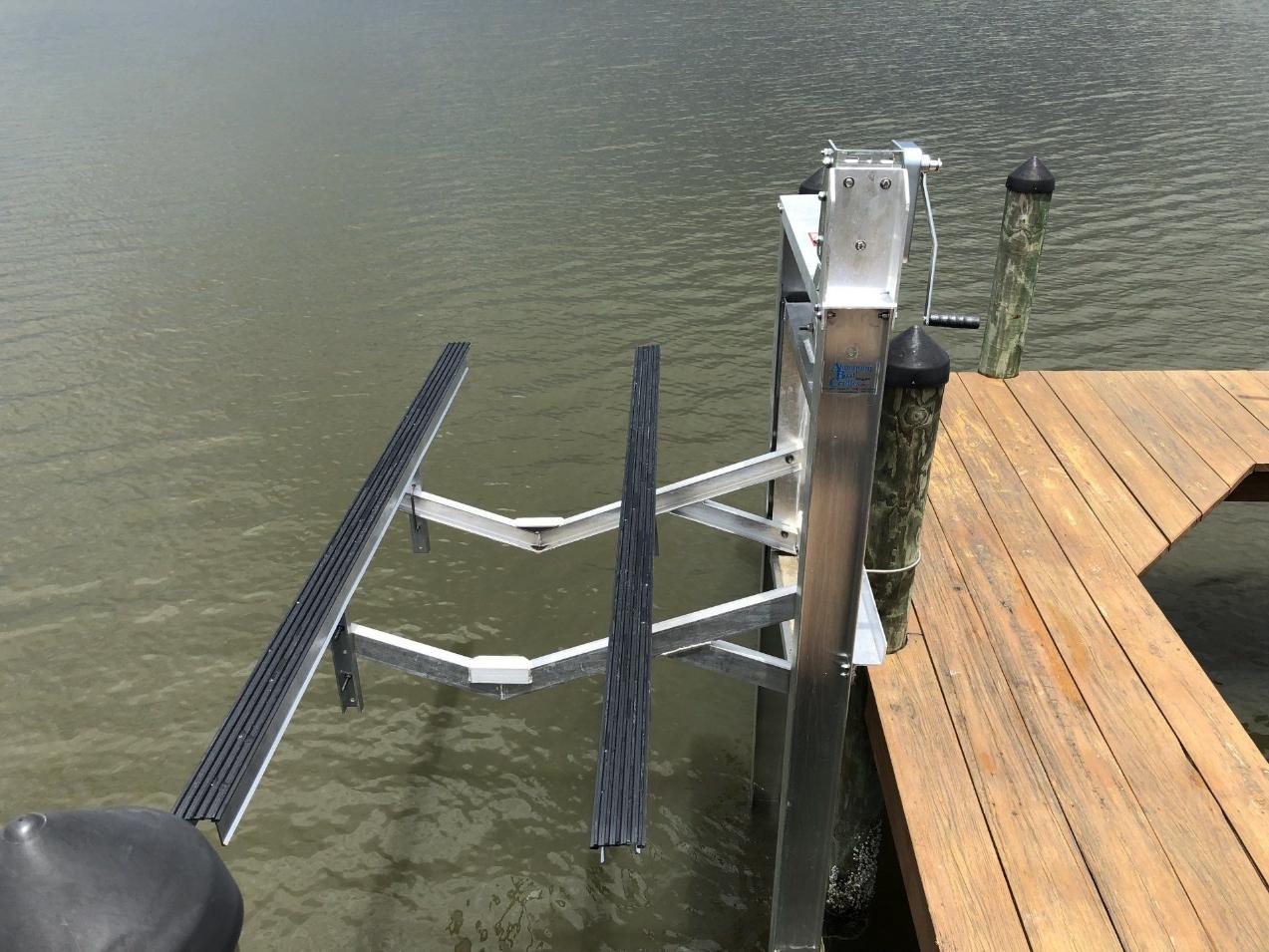
Vertical lifts are among the most versatile, raising the boat straight out of the water using a cable and pulley system. They work well in areas with changing water levels and accommodate a variety of hull types. Cantilever lifts operate using a rocking motion, offering smooth lifting but are better suited to shallow, stable waters.
Hydraulic lifts offer high lifting speeds and minimal noise, powered by hydraulic cylinders rather than cables. These are more complex and usually higher in cost but provide excellent performance and longevity. Floating lifts are ideal for deep or fluctuating waters, often used with floating docks. Elevator lifts mount to pilings or seawalls and move boats vertically or at an angle, suitable for narrow waterways or limited space.
In terms of power, you can choose between manual operation, electric motors, or solar-powered systems. Electric lifts are the most common, offering convenience at the push of a button. For more remote locations or eco-conscious boaters, solar-powered lifts reduce energy costs and eliminate the need for electrical hookups.
Factor in Maintenance, Safety, and Long-Term Costs
A quality boat lift is a long-term investment, so it’s essential to factor in maintenance requirements and operating costs. Marine environments are harsh, and even the best materials will degrade without proper upkeep. Aluminum and stainless steel components are highly recommended for their rust resistance and structural strength.
Routine maintenance involves checking cables, pulleys, hydraulic fluid (if applicable), and inspecting for any corrosion or wear. Working with a boat lift install service that offers ongoing maintenance can help you stay ahead of issues and prolong the life of your lift.
Safety features are also worth evaluating. Look for lifts with secure locking mechanisms, backup power options, and weight sensors that prevent overloading. These features not only protect your boat but also improve user safety and system reliability.
While it’s tempting to opt for a lower upfront cost, investing in a reliable, well-constructed lift will save you money in the long run. Consider not just the initial purchase, but also installation, maintenance, and potential repair costs over the years. When searching for “boat lift sales near me”, focus on dealers that offer full-service packages, warranties, and customer support to get the best value.
Conclusion
Choosing the right boat lift for your waterfront property requires careful consideration of your boat’s specifications, environmental conditions, dock type, and long-term usage. There is no one-size-fits-all solution, but by understanding your unique needs and working with professionals, you can find a system that protects your investment and enhances your boating experience.
Whether you’re in the market for the best boat lift for small boat applications or require a robust system for a larger vessel, taking the time to evaluate all aspects will pay off in performance and peace of mind. Engaging with a trusted boat lift install service ensures a smooth setup, while local providers found through a search for “boat lift sales near me” can offer the regional expertise and ongoing support needed for years of worry-free boating.
Need Boat Lift Solutions Near You?
Ready to elevate your waterfront experience? Reach out to us at Boat Lift Solutions today, and let our expert team provide the reliable, high-quality boat lift services you deserve. Whether you need installation, maintenance, or repairs, we’re here to deliver tailored solutions that protect your investment and keep your boating hassle-free. Contact us now and let’s get your lift running at its best!